One of the first questions new ham operators ask is “Which antenna should I use?” Let’s assume that the ham’s first radio is a hand-held (HT). These typically include an antenna that fits in the box–the rubber duck. First, a bit of advice about which antenna you should not use.
- The short “rubber-duck” antenna that comes with an HT radio is not a “bad” antenna. It can operate satisfactorily in some cases, but its performance will limit the range and clarity of your signal so most hams will replace it almost immediately.
- HTs, and the ham bands (VHF/UHF) they support, are not cell phones and don’t work very well indoors regardless of the antenna–unless that antenna is outdoors. This means you’ll want to connect your HT “base station” to an external antenna to reach out with a clear signal. Sure, you can use any of the antennas discussed here on an outdoor mount–using 50-ohm feed cable to bring the signal into the house. Keep antenna leads as short as possible. Keep in mind that metal roofs, metal studs, metal moisture barriers, home appliances, and other metal can block (absorb) radio signals or even reflect them back and keep them confined indoors.
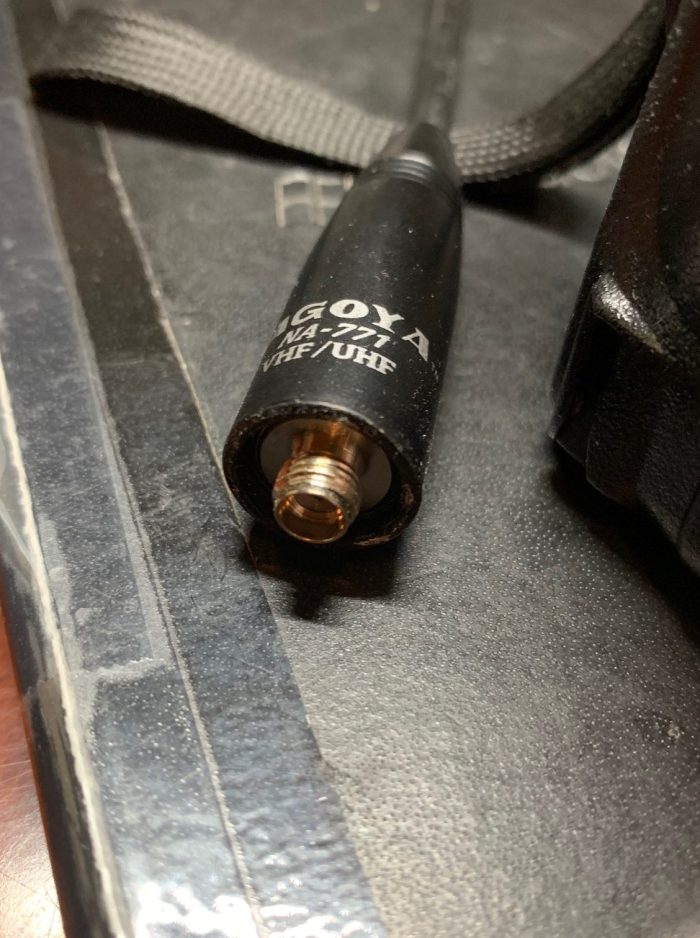
- For my Yaesu, Anytone, and Kenwood HTs, their antennas connect to the HT via screw-on SMA male or female connectors. How do you know which one you need? First, don’t try this with a walkie-talkie or any radio that does not have a removable antenna. Unscrew the antenna and examine the radio. Shown in figure 1 is my Yaesu FT3DR HT. It uses a SMA female connector as does my FT5DR HT.
Wait. the threaded part looks like it should be a male connector. It’s not. The gender of the connector is determined by the tiny pin (for the male) or a tiny hole (for the female) inside the connector.
Tip: SMA connectors can (and do) break off if the radio is dropped or mishandled. Consider using an SMA to BNC adaptor…
Not Confucius
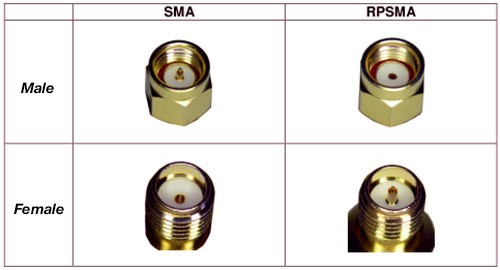
SMA and RPSMA connector genders.
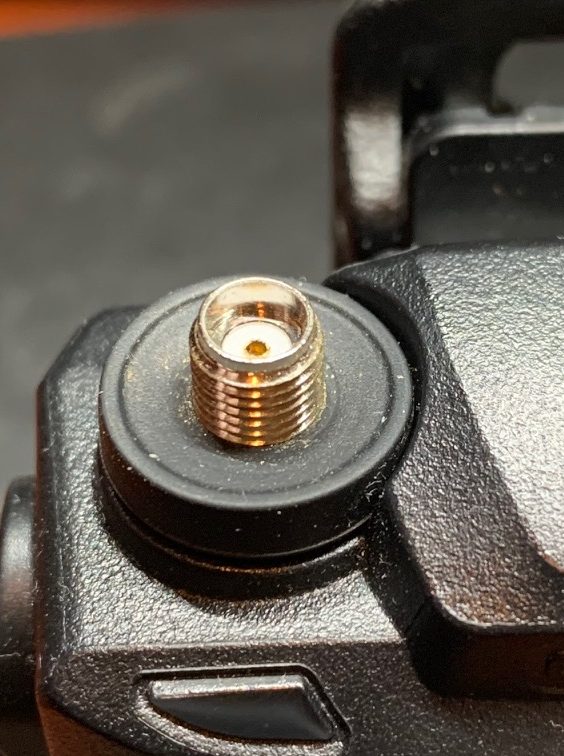
The SMA male antenna connector is shown in Figure 2. Notice the pin inside the threaded barrel.
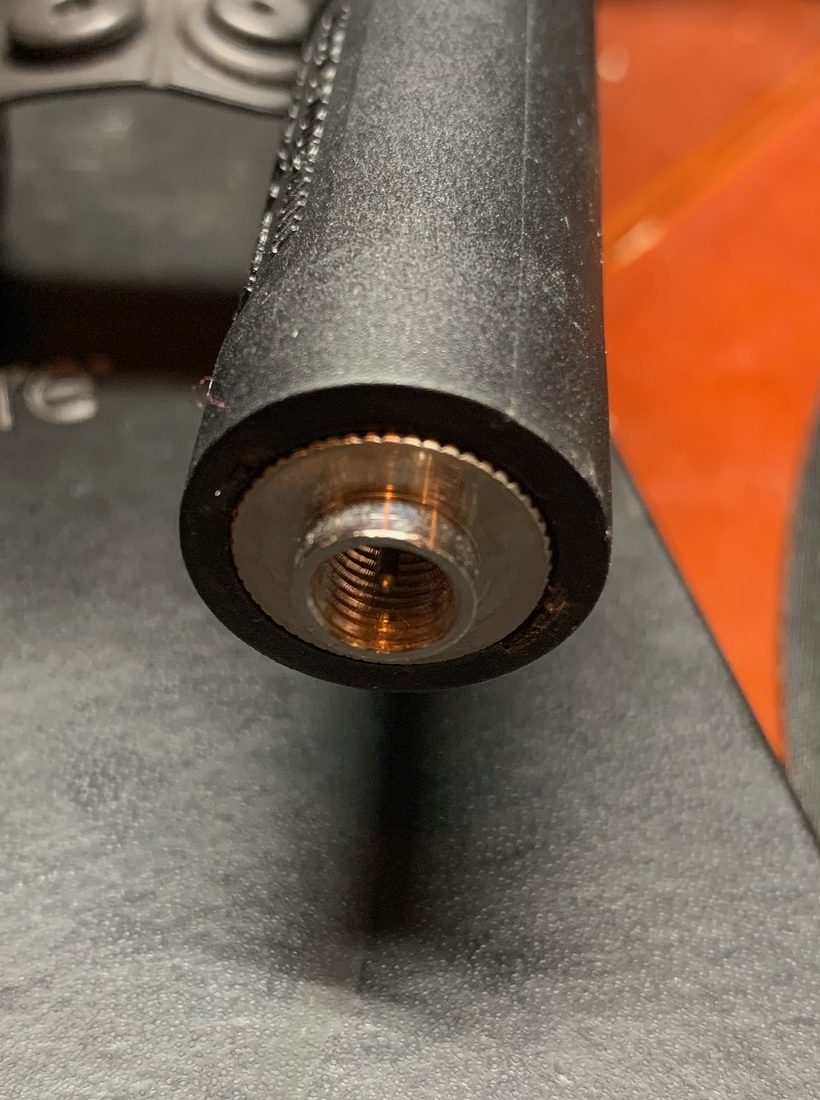
My Anytone 878 uses an SMA male connector on the radio. This means the antennas I bought for my Yaesu HT and Kenwood TH-D74 are not compatible without an adapter–which costs almost as much as a new antenna.
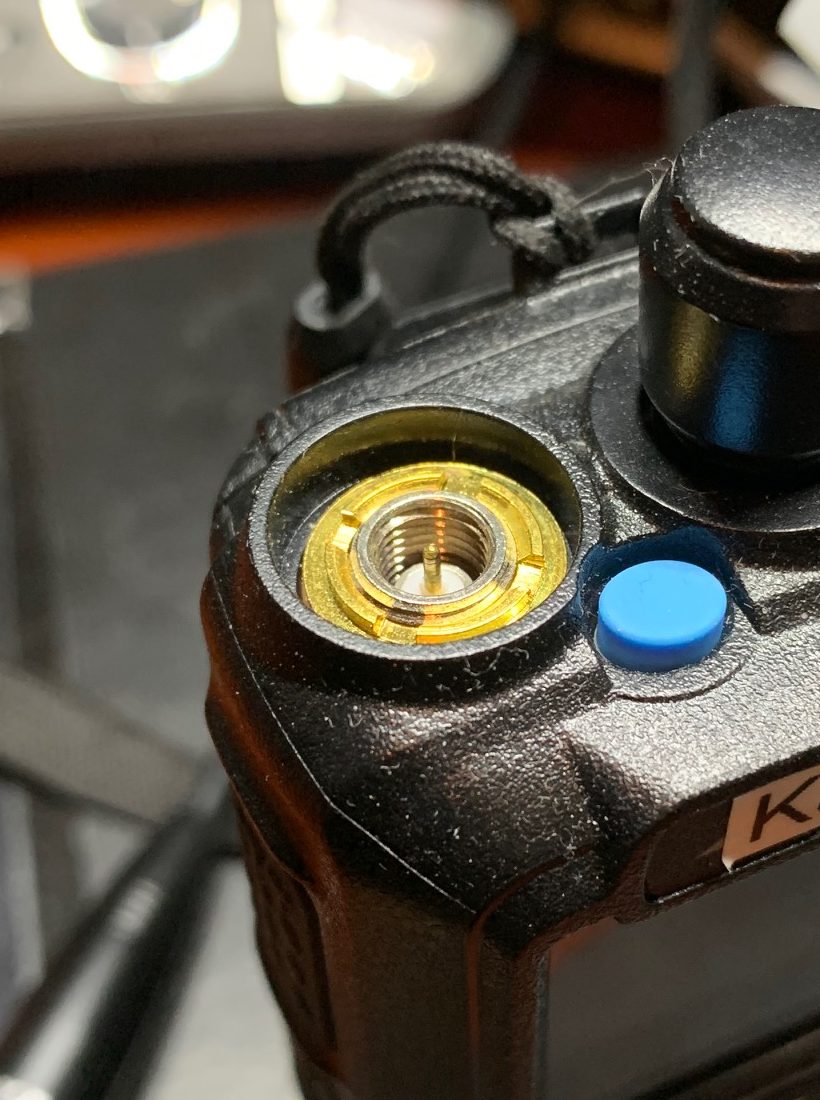
With this antenna connector we have to be careful not to bend the center conductor pin or let it get contaminated with dirt or moisture. Yes, many antennas come with rubber seals to keep out water or other nasty stuff.
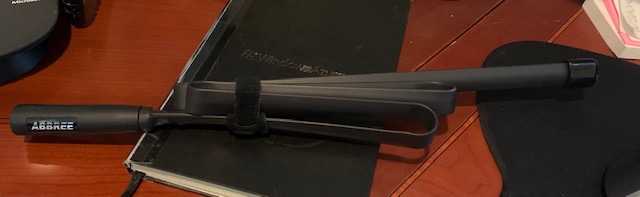
- As with most hams, we choose the right antenna for the right application. While the stock rubber-duck antenna might have poor performance, it might be the best choice when performance is not an issue but a small antenna foot-print makes more sense. For exceptional performance, longer antennas often perform better. I’ve tried a 42″ Abbree antenna that folds up either for storage or convenience. Yes, while it’s still functional when folded as shown in figure 5, optimal performance (range and clarity of signal) is achieved by fully extending the antenna to full length. But then, it’s so long it will poke your eye out so be careful. I usually keep mine folded in half until I get so far away from the repeaters that I need the extra range.
Which is right for you?
As with most technical questions, the answer begins with “it depends.” When I got started, I asked my local Elmer and attended as many ham club meetings as possible. We still hold these meetings over Zoom but you can also ask questions online on Facebook, and on the daily nets in your address.
My friend John (K9JEB) put a number of these antennas on his antenna analyzer to see how well they performed. These high-tech devices, like the NanoVNA, are inexpensive and while they’re a challenge to use, there are plenty of YouTube videos on how to check out your antenna. Better yet, ask a fellow ham for a good HT antenna. The trick to using the NanoVNA is to install its software on a laptop and use the full-sized menus and see the results on a 23″ screen and a mouse to select the options. Most HT antennas are not expensive (less than $50) so we often get more than one and trade them for favors or other equipment.
Mounting the Antenna Outdoors.
Any of these SMA connector antennas can be mounted on a suitable “mobile” mount. Typically, a mount designed to attach to a vehicle (or boat), have USB (PL-259) or NMO connector. These are much larger, tougher and designed to withstand moderate abuse. Yes, I have used these for over fifty years with great success. And yes, I remove my antenna before I drive through a carwash. Oh. I managed to destroy my NMO mount when I cross-threaded it while reattaching it after the car’s bath. That was an expensive mistake.
My Tesla Model X gave me a bit of back-talk, but I finally settled on a trunk-lip mount that attached to the car’s frunk (front trunk) and I was able to thread the antenna cable (pre-attached to the mount) through a large (think rain-gutter-sized) hole in the firewall. Until I got my Yaesu FT400, I connected my HTs to this antenna mount (it’s an NMO-type) and got great performance. Again, lots of “this-to-that” connectors helped make those connections. In this case the cable used a mini-VHF connector that I had to convert to SMA and then to PL-259 for the “real” mobile radio.
Update: My latest Tesla Model X had no such hole in the “firewall,” but I had no trouble snaking the (fairly small) antenna connector under the outer body panel and inside the car by running it under the soft rubber weatherstripping.
But we’re mostly focusing on SMA-mounts in this article. Sure, you can get external SMA mounts. I have several–one is a “window-clip” style as shown in Figure 6–designed to clip to the car window. In my case, I clipped it to the air-conditioner outside the office window and run the cable back inside to connect to my HT. This model will work with my Anytone 878 radio as it has a female SMA connector. I later gave up on the window-clip approach and got a common PL259 mag-mount (magnetic mount) and converted back to SMA indoors using an adaptor.
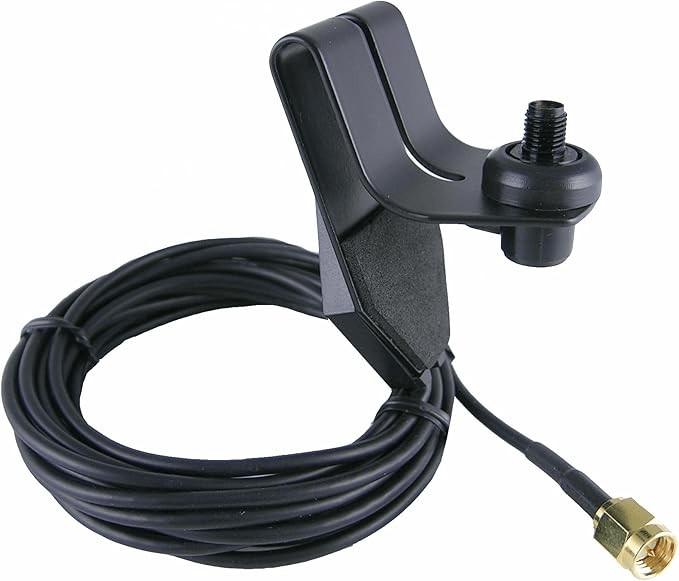
Figure 6: SMA Male Window lip mount.
I’ve also attached an NMO mount to the rain-gutter outside to hold my tri-band antenna (VHF/UHF/220) for my Anytone 578 base-station radio which uses a PL-259 antenna connector.
These types of mounts work best if the antenna has a metal counterpoise. Ordinarily a mobile mount uses the car frame, the trunk (or frunk) lid, or the roof as a reference “ground” for the antenna. When using home-brew mounts, as I have done, connecting (electrically) to the rain gutter or the metal AC cover gives better performance. We’ve also see hams create antennas using cookie sheets as the counterpoise (ask your spouse first before putting a hole in the wash tub or her favorite metal cookie sheet). When the antenna is attached to an HT, YOU are the ground. Some hams connect an extra (frequency-appropriate) length of wire to the ground side of the antenna connector to improve the counterpoise efficiency (as when you keep the radio in your jacket pocket).
Base Station Antenna for the HT?
Sure, you can connect a large VHF/UHF antenna to the HT. I have a Jpole mounted in the attic above my head that I ordinarily connect to my base station, a Yaesu 991A. To connect the antenna to my HT, I bought an adaptor as shown in Figure 7.
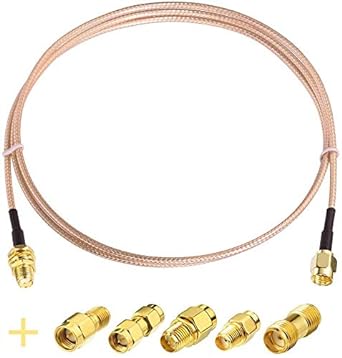
Figure 7: SMA Connector kit
When I was done (are we ever done?) I had a box of these adaptors used to configure random antenna in the field.
More HT Tips
When I first started using my HT, my hands were often busy doing stuff, so I kept the HT clipped to my belt and then later to a vest designed for this specific purpose. When I got a call, that meant I had to unclip the HT or get my vest to release it. This comical exercise was like trying to get a three-year-old to give up an ice-cream cone on a hot summer day. After that, I bought external microphones for my HTs. These dramatically improve the usability–just ask any police officer. They clip the radio (with the buttons disabled) to their belt or vest and string the speaker/microphone to clip on their epaulet (on their shoulder). Better yet, an earpiece can dramatically reduce the power needed to keep your HT working all day.
I suggest that you buy an extra battery and keep it charged. They can even be charged from your vehicle battery. HTs give little warning and generally fail as you’re transmitting something critical. Note that the length of time it takes to install a charged battery is directly proportional to the importance of the conversation you were having.
When using an HT as a base station, you won’t (shouldn’t) transmit when the HT is in the charger–it does not supply enough power to transmit–only the battery does–unless the DC port is connected to a high-amperage DC source. This is where Anderson Power poles come in handy. Build a cable to connect your HT’s charging cable directly to your base station’s 30-amp power supply.
Let me know via email or Facebook if you want to comment on or provide corrections to the advice offered here.
 Beta V
You must be logged in to post a comment.